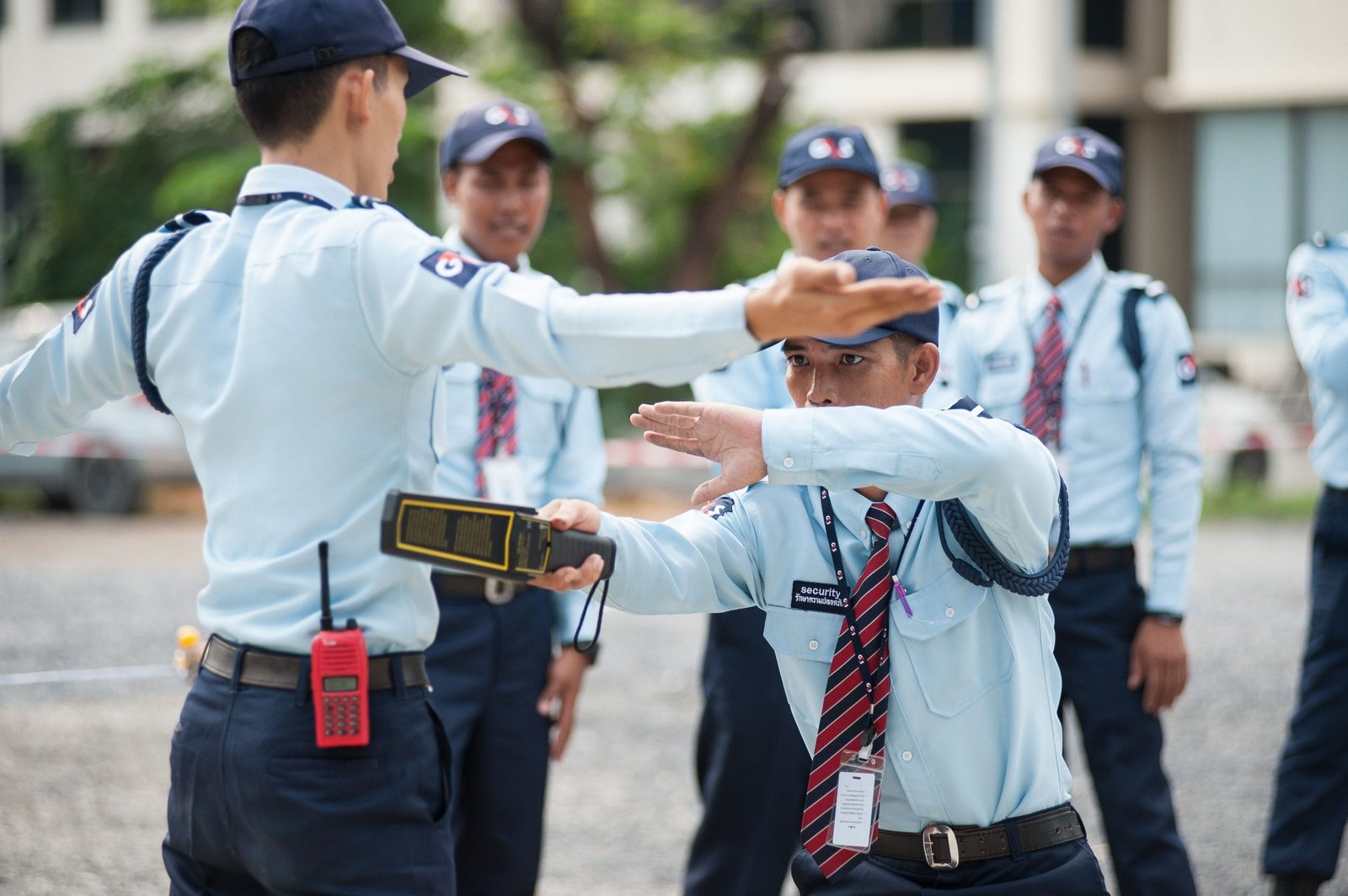
Security Personnel Training
Security Personnel Training in Turkey: Ensuring Quality and Compliance

Security personnel training in Turkey is a regulated, multifaceted process that ensures only qualified, skilled individuals serve in private security roles. Governed by Law No. 5188, this training is essential to create a workforce of proficient private security guards capable of addressing the growing need for safety across various sectors. This law, enacted on June 10, 2004, established standards for the training and certification of security personnel, specifying that only certified training providers authorized by the Ministry of Internal Affairs or special training organizations may deliver this training. In this article, we delve into the key aspects of security personnel training in Turkey, the legal framework, training content, and additional skills necessary for a successful career in private security.
Overview of Law 5188 on Private Security Training
The cornerstone of security training in Turkey, Law 5188, stipulates the requirements for training individuals seeking to work in private security. According to this legislation, individuals can receive private security training from the Ministry of Internal Affairs or authorized private institutions that adhere to government standards. This ensures that training programs are consistent in quality and scope, equipping security personnel with essential skills, knowledge of the law, and situational awareness.
There are two main categories of private security guards in Turkey:
- Unarmed Security Guards: Candidates need a secondary school education and must complete a minimum of 90 hours of training.
- Armed Security Guards: Candidates must hold at least a high school diploma and undergo a minimum of 120 hours of training.
Upon completing their training, candidates must pass a written and practical exam administered by the Ministry of Internal Affairs, achieving a minimum score of 60 out of 100 to be deemed qualified.
Key Components of Security Personnel Training
The core training for private security personnel covers various essential topics. These training modules provide foundational knowledge and skills that security personnel require to respond effectively in their roles. Here are some of the primary areas covered:
- Law and Regulation Compliance: Security personnel must understand the legal framework guiding their actions, particularly Law 5188, which governs their responsibilities, limitations, and the legal boundaries of their role.
- Communication Skills and Body Language: Effective communication and understanding body language are essential skills that enable security personnel to de-escalate situations, maintain professionalism, and engage appropriately with the public.
- Risk Assessment and Planning: Security personnel are trained to assess risks, analyze vulnerabilities, and develop suitable response plans, ensuring they are prepared to handle various situations.
- Fire Safety and Emergency Management: Basic firefighting, emergency evacuation procedures, and the management of fire safety equipment are crucial to maintaining safety standards.
- First Aid: Personnel must learn essential first aid techniques to provide initial support in medical emergencies, ensuring the well-being of individuals on-site until medical professionals arrive.
- Management of Crowds and Conflict: Crowd control and conflict management skills prepare security guards to handle large groups, preventing incidents in public places or event settings.
Advanced Security Training and Specialized Skills
To prepare security personnel for specialized roles, advanced training sessions are periodically conducted. These go beyond basic skills and cover a wide range of topics, from bodyguard services to understanding terrorist threats. Altay Private Security Company, for example, provides in-depth training programs led by experienced instructors, often using visual aids such as training videos and interactive sessions. Some of the advanced training topics include:
- Detection of Suspicious Behavior: Security personnel learn techniques to identify suspicious individuals and behaviors, a crucial skill in preventing potential security breaches.
- Terrorism Awareness and Prevention: Training covers identifying signs of terrorist activities and preventive measures, crucial in today’s high-risk security landscape.
- Handling Explosives and Hazardous Materials: Security personnel are trained to recognize and handle explosives and other hazardous items in a controlled manner, minimizing risks in sensitive areas.
- Protection of Incident Scenes: Personnel are taught how to secure an incident scene, preserve evidence, and maintain order until authorities arrive.
- Shoplifting and Anti-Theft Techniques: This training prepares security staff working in retail environments to detect and prevent shoplifting incidents effectively.
- Stadium and Event Security: Managing large crowds, identifying potential threats, and implementing safety protocols are emphasized in stadium security training.
Importance of Regular Training and Certification Renewal
Regular training updates and certifications are necessary to ensure security personnel remain up-to-date with evolving security protocols and technology. Most security companies provide refresher courses and continuous professional development programs to keep their teams well-prepared. These courses are particularly important in maintaining certifications and adapting to new security challenges and technologies.
For instance, companies like Altay Private Security use training CDs and interactive materials that encourage active participation from trainees, reinforcing key concepts and skills. By incorporating visual and hands-on training tools, these programs help personnel retain essential information, preparing them for real-world scenarios.
Quality Assurance and Performance Monitoring
Quality assurance and monitoring are crucial to maintaining the high standards required of security personnel. Periodic evaluations are conducted to ensure personnel perform effectively and adhere to security protocols. Additionally, routine assessments allow for the identification of any areas requiring improvement, enabling targeted training interventions. This commitment to quality ensures that personnel are always ready to provide effective security services.
Conclusion: Ensuring Reliable and Skilled Security Personnel in Turkey
Security personnel training in Turkey is more than a formal requirement; it is a comprehensive process that ensures personnel can protect and serve clients effectively. Governed by Law 5188, this training covers essential security topics, advanced techniques, and regular certification renewal to keep security guards prepared for evolving security needs. With well-trained personnel, organizations and individuals in Turkey can enjoy a safer environment, knowing that their security needs are managed by professionals equipped to handle any situation.
Security Personnel Training FAQ
What is Law 5188 in Turkey?
Law 5188 regulates private security services in Turkey, setting the standards for training, certification, and compliance for security personnel.
How long is security personnel training in Turkey?
Unarmed security personnel training in Turkey require 90 hours of training, while armed security personnel training in Turkey must complete 120 hours.
Who provides private security training in Turkey?
Private Security Training in Turkey is offered by the Ministry of Internal Affairs or authorized private institutions following strict regulatory standards.
Is continuous training required for security personnel?
Yes, continuous training is encouraged to ensure that security personnel stay updated on new techniques and regulatory changes.
What topics are covered in advanced security personnel training?
Advanced security personnel training includes terrorism awareness, explosives handling, crowd management, and protection of special facilities.
Do security guards need a high school diploma?
Unarmed security guards must have secondary school education, while armed guards need a high school diploma.
Can security personnel carry firearms in Turkey?
Only trained and certified armed security personnel are permitted to carry firearms under specific conditions.
How often is retraining required for security personnel?
Many companies conduct annual retraining to ensure security personnel maintain their skills and adapt to any changes in security protocols.